Occupational Radiation Dose to Staff in Endovascular and Interventional Procedures
Introduction
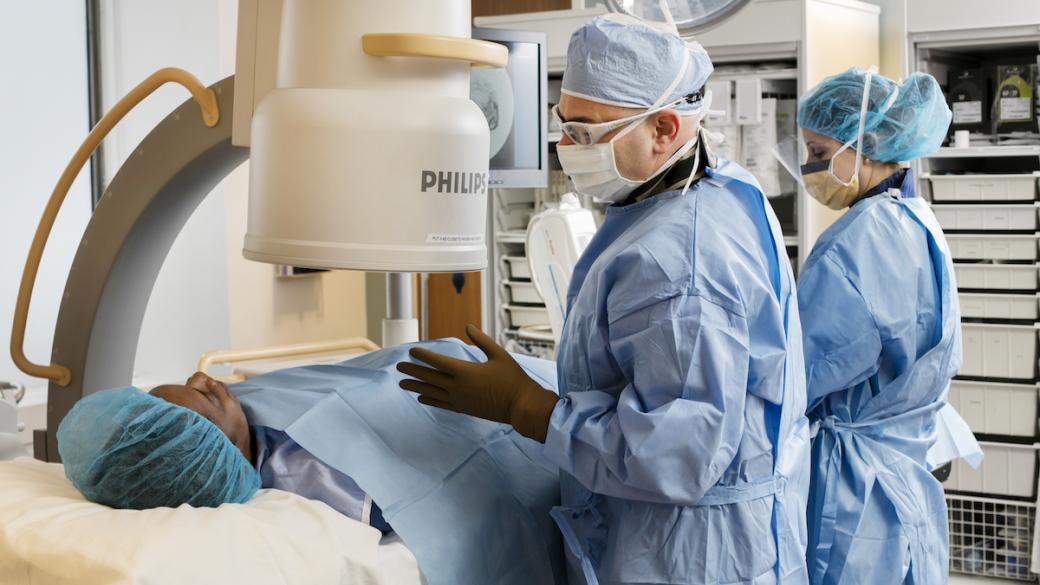
Fluoroscopy-guided endovascular and interventional radiology procedures expose medical staff to scattered ionizing radiation while they are required to remain in close proximity to the patient. Although individual procedure doses are typically far below deterministic thresholds, cumulative occupational exposure may be substantial over a professional lifetime.
Epidemiological evidence links chronic low-dose exposure in interventional staff to increased risks of cataract formation, malignancy, and potential cardiovascular effects. Consequently, international guidelines (ICRP, IAEA) emphasize the principles of justification, optimization (ALARA), and dose limitation for occupational exposure.
Measuring staff dose serves several critical purposes:
- Identification of high-dose procedures and staff roles
- Benchmarking and audit of radiation protection practice
- Optimization of shielding, positioning, and workflow
- Prevention of cumulative dose approaching regulatory limits
Explanation of Procedure Acronyms
- EVAR – Endovascular Aortic Repair (infrarenal abdominal aortic aneurysm)
- TEVAR – Thoracic Endovascular Aortic Repair
- FEVAR – Fenestrated Endovascular Aortic Repair
- BREVAR – Branched Endovascular Aortic Repair
- TAAA – Thoracoabdominal Aortic Aneurysm (endovascular repair)
- TIPS – Transjugular Intrahepatic Portosystemic Shunt
- TACE – Transarterial Chemoembolization
- PAE – Prostatic Artery Embolization
- UFE – Uterine Fibroid Embolization
- Neuro-interventional embolization – Endovascular treatment of intracranial or spinal vascular pathology (e.g. aneurysm, AVM, thrombectomy)
Benchmark Occupational Effective Dose per Procedure
The tables below summarize typical mean effective doses to staff per procedure, expressed in mSv per procedure. Values represent effective dose estimates derived from collar dosimetry using standard conversion factors and are intended for benchmarking and optimization rather than regulatory compliance.
Aortic and Complex Endovascular Procedures
| Procedure | Operator (Surgeon/IR) | Radiographer | Nurse |
|---|---|---|---|
| EVAR | 0.3–0.8 | 0.15–0.4 | 0.15–0.5 |
| TEVAR | 0.4–1.0 | 0.2–0.5 | 0.2–0.6 |
| FEVAR | 0.8–2.0 | 0.3–0.8 | 0.3–0.9 |
| BREVAR | 1.0–2.5 | 0.4–1.0 | 0.4–1.2 |
| TAAA (endovascular) | 1.5–4.0 | 0.6–1.5 | 0.6–1.8 |
Visceral and Oncologic Interventional Radiology Procedures
| Procedure | Operator | Radiographer | Nurse |
|---|---|---|---|
| TIPS | 0.5–1.5 | 0.15–0.4 | 0.2–0.6 |
| TACE | 0.2–0.6 | 0.1–0.3 | 0.1–0.3 |
| PAE | 1.0–3.0 | 0.6–1.2 | 0.4–1.0 |
| UFE | 0.1–0.3 | 0.1–0.25 | 0.1–0.25 |
Neuro-interventional Procedures
| Procedure | Operator | Radiographer | Nurse |
|---|---|---|---|
| Neuro embolization / thrombectomy | 0.6–2.0 | 0.2–0.6 | 0.2–0.6 |
A single complex procedure (e.g. FEVAR, TAAA, PAE) may contribute an occupational effective dose of the order of 1–4 mSv. Radiographers and nurses may receive doses comparable to or exceeding those of operators, particularly when shielding mobility is limited or positioning is suboptimal.
Conclusion
Occupational radiation exposure in modern endovascular and interventional practice is highly procedure- and role-dependent. Routine measurement and benchmarking of staff dose are essential to identify high-risk workflows and to guide targeted optimization strategies, including shielding configuration, staff positioning, and procedural technique.